

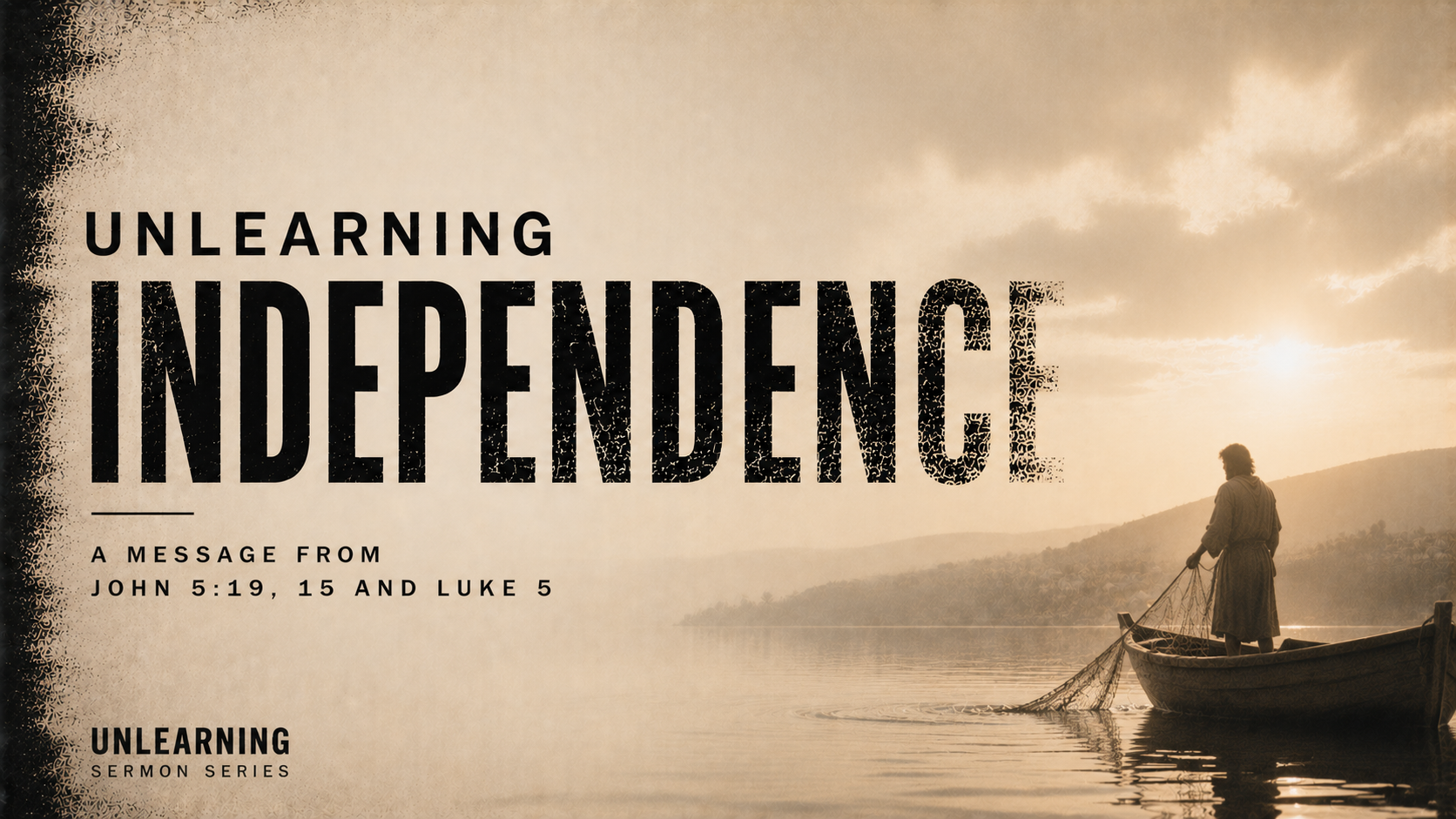
Unlearning Independence: Why Christian Maturity Means Depending on God More
We live in a culture that celebrates independence.
From childhood, we are taught to do things for ourselves. We learn to tie our shoes, make decisions, solve problems, find work, pay bills, and take responsibility for our lives. Growing in competence and responsibility is good. The problem begins when healthy responsibility quietly becomes spiritual self-reliance.
We can become so good at handling life that we forget we were never designed to handle life alone.
Most Christians do not consciously decide to live independently from God. It happens much more subtly. We learn to manage our schedules, solve problems, lead our families, perform our jobs, and fulfill our ministry responsibilities. Eventually, we can go through an entire day without stopping to ask God what He is doing.
We are not necessarily trying to rebel against God. We are simply functioning without consciously depending on Him.
But Christian maturity is not the journey from dependence to independence. Christian maturity is learning to live in deeper dependence on God.
What Does It Mean to Depend on God?
Depending on God means living with the awareness that He is the source of our life, wisdom, strength, and fruitfulness. It means receiving before producing, listening before acting, and asking what God is doing before asking Him to bless what we have already decided.
Jesus modeled this kind of dependence. In John 5:19, He said, “The Son can do nothing by himself; he can do only what he sees his Father doing.”
Jesus was not confessing a lack of divine power. He was revealing the perfect communion between the Father and the Son. His life was characterized by receptivity, obedience, and dependence on the Father.
Jesus did not come to teach us how to become independent from God. He came to show us what a life of complete dependence on God looks like.
That means the Christian life does not begin with “Try harder.” It begins with “Receive.”
Before we serve, we receive. Before we speak, we listen. Before we go, we remain. Before we ask, “What do I need to do?” we learn to ask, “God, what are You doing?”
Christian Maturity Is Deeper Dependence
Our culture often defines maturity as needing less help. Scripture gives us a different picture.
The mature Christian is not the person who eventually says, “I can handle life without God.” The mature Christian is the person who increasingly understands, “I need God in every part of my life.”
Paul declared in Acts 17:28, “For in him we live and move and have our being.” Jesus made the same truth personal in John 15:5: “Apart from me you can do nothing.”
These words are not a condemnation. They are an invitation.
Jesus invites us to share in the life of dependence that He lives with the Father. He calls us to remain—or abide—in Him.
We can gain biblical knowledge without becoming more dependent on God. We can become more productive without becoming more present. We can appear successful while becoming less surrendered. We can even become better at practicing Christianity without becoming more like Christ.
That is why spiritual formation is not merely about learning more information. It is about becoming people who live from a deep, daily connection with Jesus.
Abiding in Christ Is the Source of Spiritual Fruit
In John 15, Jesus describes Himself as the vine and His followers as the branches. A branch does not produce fruit through frantic effort. It bears fruit because it remains connected to the vine.
Spiritual fruitfulness is the result of connection with Jesus.
This does not make effort or spiritual disciplines unnecessary. It changes their purpose.
Prayer is not a way to convince God to show up. Scripture is not merely information to collect. Worship is not a performance. Silence is not wasted time. These practices help us remain attentive and connected to the One who is already present.
Depending on God does not mean doing nothing. It means doing nothing apart from Him.
Jesus lived an active life. He taught, healed, traveled, confronted injustice, served others, suffered, and obeyed the Father all the way to the cross. Yet His activity flowed from communion with God.
The central question is not simply, “Am I working hard?” It is, “Am I working from a living connection with Jesus?”
Depending on God Includes Depending on Others
Independence often tells us, “You should be able to handle this yourself.”
We do not want to appear needy. We hesitate to inconvenience others, admit weakness, or ask for help. Sometimes we even spiritualize our isolation by saying, “I do not need anyone. I only need God.”
But God never intended the Christian life to be lived alone.
Scripture describes the church as a body whose members are connected to one another. We need friends, mentors, pastors, small groups, and people who will pray for us. We need relationships in which we can be known, challenged, encouraged, and loved.
Ecclesiastes 4:9–10 reminds us that two people are better than one because they can help each other succeed and lift each other when one falls.
Sometimes dependence on God looks like kneeling in prayer. Sometimes it looks like calling a friend and saying, “I need help.” God often provides what we need through His people.
Depending on others does not make us less responsible. It makes us more willing to receive. We do not have to carry, know, solve, or pretend to understand everything by ourselves.
Stop Asking God to Bless Your Plan
Spiritual independence often sounds like this: “God, I have a plan. Will You bless it?”
Sometimes our prayers are not genuine requests for God’s direction. We have already decided what we want to do, and we are asking God to approve it.
That is not surrender. It is recruitment.
Dependence asks a different set of questions:
Father, what are You doing?
Where are You already at work?
How are You inviting me to participate?
Proverbs 19:21 says, “Many are the plans in a person’s heart, but it is the Lord’s purpose that prevails.” Depending on God means surrendering our plans and becoming available to His purposes.
Dependence does not make us passive. Dependence makes us available.
Instead of asking only what the church can do for us, we begin asking how we can participate in God’s mission. Instead of asking what we got out of worship, we ask what God has placed within us that He wants to work through us. Instead of waiting for someone else to respond, we ask where God may be inviting us to serve.
Busyness Can Become an Enemy of Dependence
One of the greatest enemies of dependence on God may not be rebellion. It may be busyness.
Luke 5:16 tells us, “Jesus often withdrew to lonely places and prayed.” Jesus faced constant demands, crowds, expectations, and urgent needs. Yet He continued to create space to be with the Father.
Jesus refused to let urgency determine His availability to God.
We can become so busy doing things for God that we stop being with God. We can perform the work of ministry while quietly becoming disconnected from the God we are serving.
When we fail to stop, listen, receive, and abide, we eventually try to produce spiritual fruit from an empty soul.
Jesus offers us a better way: “Remain in me.”
How to Practice Dependence on God Every Day
Depending on God becomes real in the ordinary moments of life. Here are several simple ways to practice it:
Before you produce, receive. Begin the day by asking, “Father, what do You want to form in me today?”
Before you decide, pray. Ask God what He desires rather than merely asking Him to approve your decision.
Before you react, listen. Pray, “Jesus, help me see what You are doing in this situation.”
Before you carry something alone, invite someone in. Let a trusted person know where you need prayer, wisdom, or help.
Before asking God to bless your plan, look for His activity. Ask, “Where are You already at work, and how can I join You?”
Before leaving Sunday worship behind, consider Monday’s mission. Ask Jesus what He is sending you into during the coming week.
These practices are not a formula for earning God’s favor. They are ways of becoming attentive to His presence and responsive to His leadership.
You Do Not Have to Be God
The freedom of dependence begins with a simple confession: “I am not God.”
But there is beautiful news on the other side of that confession: I do not have to be.
I do not have to control everything, know everything, fix everything, carry everything, or manufacture my future. I do not have to be the source because God is.
I can receive. I can abide. I can belong. I can participate. I can be sent.
The goal of Christian maturity is not to reach the point where we can say, “I’ve got this.” It is to live with the confidence to say, “I’ve got Jesus.”
And He is enough.
Frequently Asked Questions About Depending on God
Is dependence on God a sign of weakness?
No. Dependence on God is a biblical posture of trust, obedience, and connection. Jesus Himself lived in complete communion with the Father. Depending on God allows our actions to flow from His strength and wisdom rather than self-reliance.
What does abiding in Christ mean?
Abiding in Christ means remaining connected to Jesus through ongoing trust, prayer, obedience, Scripture, and attentiveness to His presence. According to John 15, this connection is the source of lasting spiritual fruit.
Does depending on God mean I should stop making plans?
No. Scripture does not forbid wise planning. Depending on God means holding our plans with humility, seeking His direction, and remaining willing to change course when His purposes differ from ours.
Why is Christian community part of depending on God?
God often meets our needs through other people. The church is described as a body whose members need one another. Asking for help, receiving encouragement, and allowing others to speak truth into our lives are important expressions of spiritual dependence.
How can I depend on God when life is busy?
Follow the example of Jesus by regularly creating space to withdraw, pray, listen, and receive. Even brief pauses throughout the day can help you recognize God’s presence and ask what He is doing before you act.