

Why Are There So Many Different Churches?
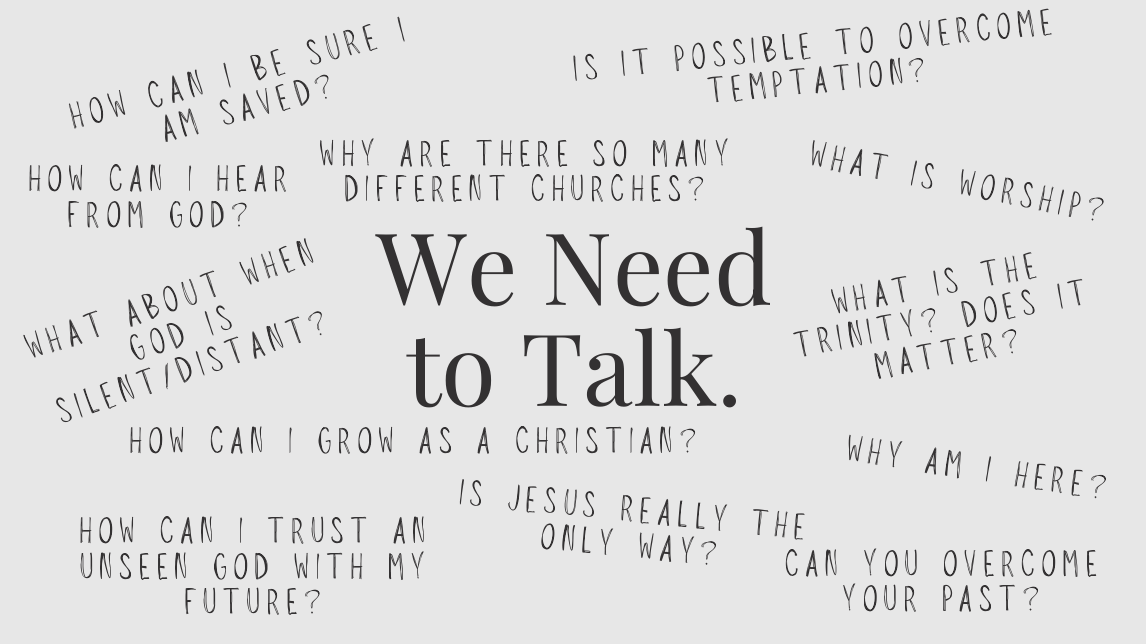
Why Are There So Many Different Churches?
At some point, many people begin asking honest questions about Christianity:
“Wait… Catholics are Christians?”
“What does it mean to be Protestant?”
“Why are there so many different churches?”
“If Christianity is true, why does it seem so divided?”
Those are fair questions. For some people, discovering the number of Christian denominations can feel confusing, overwhelming, or even discouraging. If Christians all follow Jesus, why are there Baptists, Methodists, Catholics, Lutherans, Pentecostals, Wesleyans, Presbyterians, Orthodox Christians, and so many others?
The answer is both simple and complex.
Christianity has many different traditions, but at the center of historic Christian faith is one person: Jesus Christ.
The Church Was Never Meant to Be About Sameness
The Bible never teaches that every Christian community will look exactly the same. In fact, the Apostle Paul describes the Church as a body with many different parts:
“The human body has many parts, but the many parts make up one whole body. So it is with the body of Christ.”
— 1 Corinthians 12:12, NLT
That image is important. A body has unity, but it does not have uniformity. Hands, feet, eyes, ears, and hearts are all different, but they belong together.
In the same way, Christians around the world may worship in different languages, sing different songs, practice different traditions, and organize their churches in different ways. But the goal of the Church has never been for every congregation to look exactly alike. The deeper calling is for God’s people to be united in Christ.
Why Did Different Christian Denominations Develop?
Over the past 2,000 years, Christianity has spread across cultures, countries, languages, and generations. As followers of Jesus sought to live faithfully in different times and places, different traditions began to emerge.
Some Christian traditions developed around specific ways of worship. Others formed around leadership structures, theological convictions, spiritual practices, or renewal movements.
For example, some churches emphasize:
Scripture and biblical teaching
Reverence and historic worship
Personal holiness and spiritual growth
Evangelism and mission
Prayer and spiritual formation
The work of the Holy Spirit
Justice, compassion, and service
Community and discipleship
These differences do not always mean Christians disagree about the most important things. Often, different churches are emphasizing different parts of the richness of the Christian faith.
Sometimes Division Has Been Unhealthy
Of course, church history is not always pretty. Christians have not always handled disagreement with humility, love, or grace. There have been moments when pride, power, politics, fear, and sin have created painful divisions within the Church.
That should grieve us.
Jesus prayed that His followers would be one so that the world would see the love and truth of God through them. Christian unity matters. How Christians treat one another matters. The way churches speak about one another matters.
But it is also important to recognize that not every difference is automatically a failure. Sometimes different churches are not competing versions of Christianity. Sometimes they are different expressions of the same gospel.
What Do Christians Have in Common?
While Christian denominations may differ on secondary issues, historic Christianity is centered on shared essentials.
At the heart of the Christian faith is the belief that:
Jesus is Lord.
Jesus died for our sins.
Jesus rose from the dead.
Salvation comes through Him.
Scripture points us to Him.
The Church exists to worship God and make disciples.
The Apostle Paul summarized the center of the gospel this way:
“I passed on to you what was most important… Christ died for our sins, just as the Scriptures said. He was buried, and he was raised from the dead on the third day.”
— 1 Corinthians 15:3–4, NLT
That is the foundation.
Christians may disagree about many things, but the center of Christianity is not a denomination, a worship style, a church building, or a label. The center is Jesus.
No One Tradition Carries the Full Richness Alone
One of the healthiest things Christians can remember is this:
No single tradition carries the full richness of the Christian faith by itself.
There is wisdom in learning from one another with humility instead of suspicion.
Catholic Christians can remind Protestants of the depth of history, sacrament, and global continuity. Protestant Christians can remind the broader Church of the centrality of Scripture, grace, and personal faith. Pentecostal and charismatic Christians can remind the Church of the power and presence of the Holy Spirit. Holiness traditions can remind us that grace does not just forgive us — it transforms us.
When we approach one another with humility, we may discover that another tradition is not always a threat. Sometimes it is an invitation to see something beautiful we may have overlooked.
Unity Is Found in Jesus
So why are there so many different churches?
Because Christianity has spread across centuries, cultures, languages, and communities. Because Christians have emphasized different aspects of the faith. Because people have sometimes disagreed deeply. And yes, because human beings are imperfect.
But the better question may be this:
What holds Christians together?
The answer is Jesus.
Our confidence is not ultimately in a denomination, a label, a tradition, or a tribe. Our confidence is in Christ — crucified, risen, reigning, and still building His Church.
Different churches may have different names on the sign, but the Church belongs to Jesus.
And when we keep Him at the center, our differences do not have to drive us apart. They can remind us that the body of Christ is bigger, deeper, and more beautiful than we first imagined.