

Unlearning Scarcity
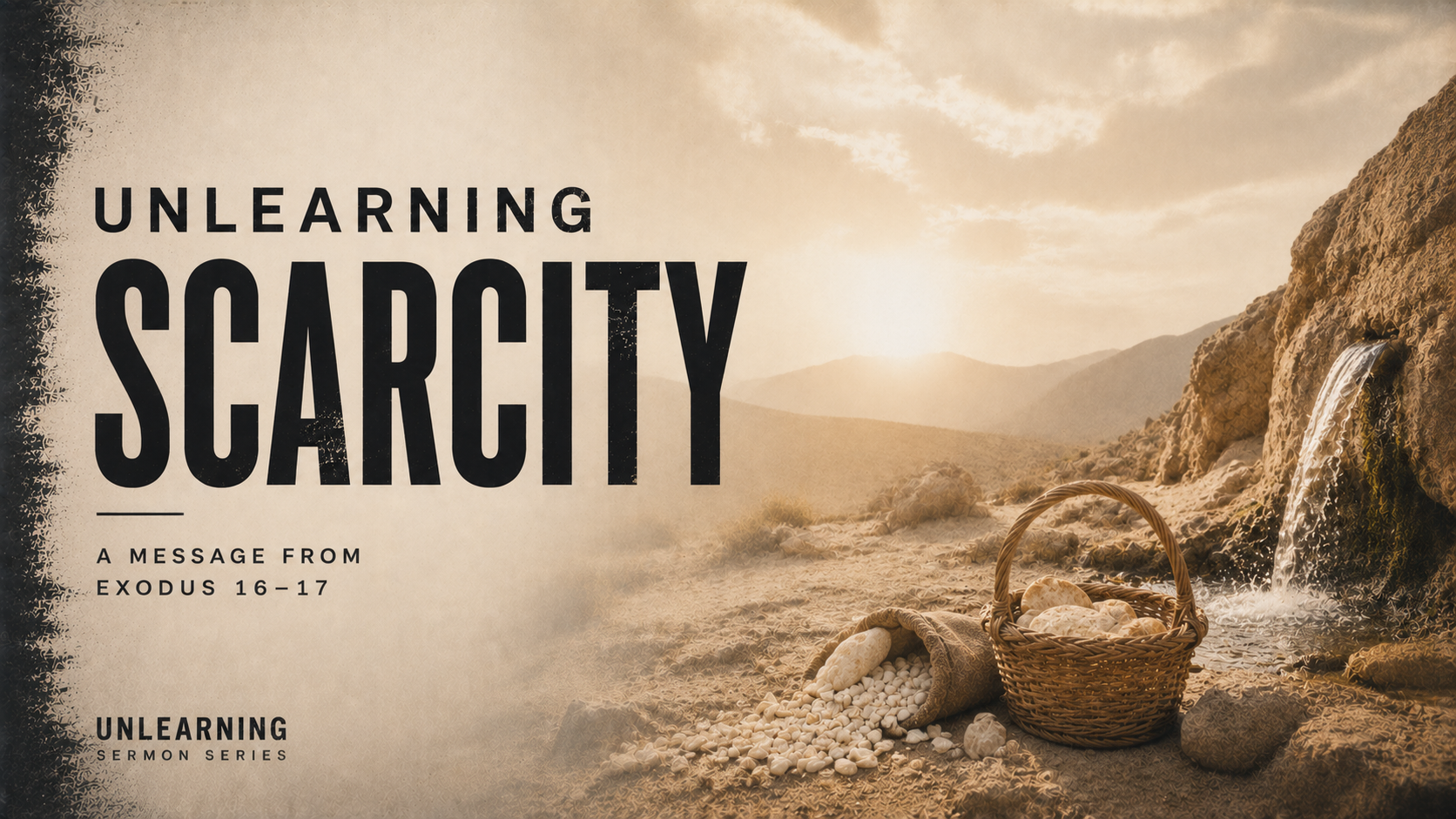
Unlearning Scarcity: How to Trust God When There Never Seems to Be Enough
Have you ever noticed how quickly fear can change the way you see everything?
Think about what happens when a snowstorm is approaching. You walk into the grocery store feeling perfectly calm. You were not worried about bread, bottled water, or anything else.
Then you see the empty shelves.
Shopping carts are overflowing. People are grabbing two, three, or four of everything. Suddenly, you begin walking faster.
Maybe I should buy another loaf of bread.
What if everyone else gets there first?
What if they run out of Diet Coke and cheese?
Nothing about your actual needs has changed. The only thing that has changed is your perception of tomorrow.
And the story you believe about tomorrow will determine how you live today.
What Is a Scarcity Mindset?
A scarcity mindset is a way of seeing life that focuses on what is missing instead of remembering what has already been provided. It convinces us that there will never be enough money, time, strength, opportunity, security, or hope.
Scarcity is not determined by how much we possess. A person can have very little and live with trust and generosity. Another person can have more than enough and still be consumed by fear.
A scarcity mindset whispers:
“What if there isn’t enough money?”
“What if I don’t have enough strength?”
“What if this opportunity never comes again?”
“What if God doesn’t come through?”
When we believe that story, we hold on tighter. We become reluctant to give. We try to control tomorrow. We begin acting as though our security depends entirely upon us.
Scarcity turns a legitimate need into a false conclusion: Because I cannot see tomorrow’s provision, it must not be coming.
Scarcity Has a Short Memory
The Israelites struggled with the same mindset in Exodus 16.
Only a short time earlier, they had witnessed some of the greatest demonstrations of God’s power recorded in Scripture. They had seen the plagues in Egypt. They had celebrated the Passover. They had walked through the Red Sea on dry ground and watched Pharaoh’s army disappear beneath the water.
On the other side of the sea, the entire nation worshiped God:
“I will sing to the Lord, for he has triumphed gloriously.”
—Exodus 15:1
But worship on the shoreline is much easier than trust in the wilderness.
Only three days later, the Israelites could not find water. When they finally found it, the water was too bitter to drink. They complained, but God graciously provided by making the bitter water sweet.
Then their food began to run out.
The people complained again. They even began describing Egypt—the place where they had been enslaved—as though it had been a place of comfort and abundance. Fear distorted their memories.
They remembered the food but forgot the slavery.
They did not mention the plagues, the Passover, the Red Sea, or the bitter water God had made sweet. All they could see was what they did not currently possess.
That is what scarcity does. It makes what is missing feel bigger than everything God has already provided.
The Israelites’ hunger was real. Their need for food was legitimate. The problem was not that they needed bread. The problem was that they interpreted their need as evidence that God had abandoned them.
What Does the Manna Teach Us About God’s Provision?
God responded to Israel’s fear by promising to send bread from heaven. Every morning, manna appeared on the ground, and each household gathered what it needed for that day.
God could have provided enough food for the entire journey at once. Instead, He gave them daily bread.
Why?
Because God was not merely filling their stomachs. He was retraining their hearts.
For generations, the Israelites had lived under Pharaoh’s control. Their lives had been shaped by quotas, demands, and fear. They had left Egypt geographically, but Egypt’s habits of fear still lived within them.
Scarcity said, “You must secure tomorrow for yourself.”
God said, “Trust Me to meet you each day.”
Scarcity said, “Your security comes from what you can collect and control.”
God said, “Your security comes from the One who provides.”
Each morning, the manna announced the same truth: God is still here. God has not forgotten you. God will provide what you need for today.
Daily bread requires daily trust.
Trusting the Provider Instead of the Provision
Moses told the Israelites not to save any manna overnight.
That instruction must have sounded unreasonable to people who had recently been hungry. Parents may have wondered, What if there is no manna tomorrow? What if God does not provide again? Shouldn’t we keep a little extra—just in case?
Some of the people did exactly that. By morning, the manna they had hidden was spoiled.
God would not allow yesterday’s provision to become today’s source of security. He wanted Israel to trust the Provider rather than turning His provision into a substitute for Him.
This does not mean planning or saving is wrong. On the sixth day, God specifically instructed Israel to gather twice as much so they could rest on the Sabbath. The issue was not preparation versus a lack of preparation. The issue was obedience versus fear.
Wise preparation receives what God provides and stewards it responsibly. Scarcity looks at what has been accumulated and says, Now I do not need to trust God.
Planning can be an act of faith. It becomes an idol when our plans take the place of the God whom no plan can replace.
How Can We Overcome a Scarcity Mindset?
Israel did not unlearn scarcity in a single day, and neither will we. Trust develops through repeated choices—one decision, one need, and one day at a time.
Here are three practices that can help us begin unlearning scarcity.
1. Remember God’s Faithfulness
Scarcity thrives on selective memory. A new problem appears, and we forget all the other problems through which God has already carried us.
Remembering is therefore a spiritual discipline.
Take time to identify the doors God opened, the people He sent, the prayers He answered, and the seasons you did not think you would survive. Remember the strength that came when yours was gone. Remember the unexpected provision. Remember the bitter water He made sweet.
Consider keeping a written record of God’s faithfulness. You might title a page in your journal “Bread in the Wilderness” and add to it whenever you recognize God’s care.
Remembering yesterday’s faithfulness gives us courage to trust God with today’s need.
2. Trust God With Today
Israel wanted enough bread for the entire journey. God gave them enough for one day.
We often want the whole plan. We want enough money, information, strength, and certainty to make dependence unnecessary. But God frequently gives us enough light for the next faithful step.
Instead of trying to solve the entire future, ask:
What is God asking me to do today?
Perhaps your next step is to make a phone call, have an honest conversation, ask for help, wait patiently, or stop trying to force an answer.
You do not have to solve next month today. You do not have to carry next year today.
God is not asking you to live tomorrow before it arrives. He is asking you to trust Him with today.
3. Practice Generosity
Scarcity closes our hands because it tells us that anything we release may never be replaced. Generosity opens our hands because it declares that our security is not limited to what we can currently see or count.
Biblical generosity is not reckless. It does not ignore responsibilities or pretend resources are unlimited. It recognizes that everything we possess is a gift entrusted to us by God.
The apostle Paul connected generosity with the manna story in 2 Corinthians 8:15. God’s provision was never meant to be merely a private lesson in dependence. It was also meant to form a community in which people shared so that everyone had enough.
Generosity can involve money, but it is much larger than money. We can share our time, attention, influence, encouragement, opportunities, hospitality, and credit.
Every generous act loosens scarcity’s grip.
Open hands allow us to receive God’s gifts with gratitude, hold them with humility, and release them when love calls.
Jesus Is the Bread of Life
Centuries after Israel gathered manna in the wilderness, Jesus taught His disciples to pray:
“Give us this day our daily bread.”
—Matthew 6:11
Dependence on God is not a stage of spiritual immaturity that we eventually outgrow. Dependence is how we were created to live.
Jesus also called Himself “the bread of life” in John 6:35. The deepest answer to scarcity is not simply a larger supply of something. It is the presence of Christ.
In Jesus, God has not merely sent us something. He has given us Himself.
God’s provision does not always arrive in the form we expect. Sometimes He changes our circumstances. At other times, He provides through another person, the courage to ask for help, the wisdom to make a difficult decision, the strength to endure, or grace that proves sufficient in weakness.
The Christian promise is not that we will never experience need. It is that our need will never have the final word over the faithfulness of God.
Enough for Today
Scarcity says, “I need control over tomorrow.”
Faith says, “I can trust God with today.”
Scarcity focuses on what is missing.
Faith remembers the God who provides.
Scarcity clutches the gift.
Faith rests in the Giver.
Perhaps God is not asking you to answer every question about your future. Perhaps He is simply inviting you to step outside your tent and receive today’s manna.
Remember what He has already done. Trust Him with the need in front of you. Take the next faithful step. Open your hands to someone else.
Tomorrow will bring its own needs, but it will not arrive without God.
The One who met Israel in the wilderness, brought water from the rock, taught His disciples to pray, and gave Himself as the bread of life will still be faithful when morning comes.
We can trust the God who provided yesterday to still be God tomorrow.
Frequently Asked Questions
What is a scarcity mindset according to the Bible?
A scarcity mindset focuses on what is missing and assumes that our security depends upon what we can accumulate or control. Exodus 16 shows that God counters this mindset by teaching His people to remember His faithfulness and trust His daily provision.
Does trusting God mean Christians should not plan or save?
No. Scripture encourages wise stewardship and preparation. The danger comes when our plans or savings become substitutes for trusting God. Faithful planning follows God’s wisdom; fearful hoarding attempts to create security apart from Him.
What does “daily bread” mean for Christians today?
Daily bread includes the physical, emotional, relational, and spiritual resources we need to remain faithful today. Praying for daily bread acknowledges that God is our provider and that we remain dependent upon Him in every area of life.
How can I begin overcoming a scarcity mindset?
Begin by remembering specific examples of God’s faithfulness, identifying the next faithful step you can take today, and practicing intentional generosity. These habits gradually teach your heart to trust the Giver rather than cling to the gift.