

Unity Reveals Jesus to the World
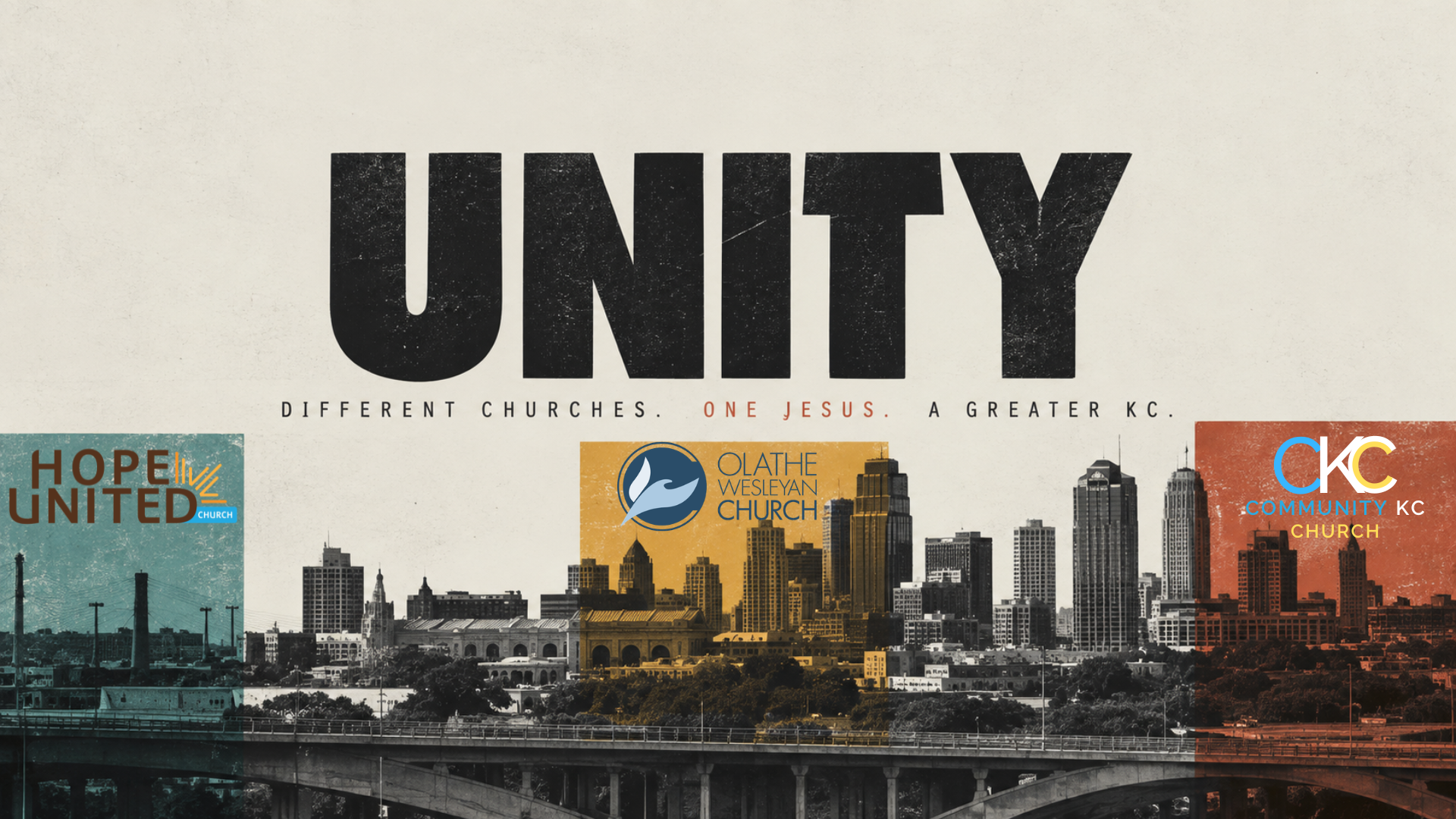
Why Christian Unity Matters: When the Church Lives as One, the World Sees Jesus
What could happen if churches stopped simply existing near one another and started doing kingdom life together?
That question matters because churches can easily begin to think of themselves as separate organizations competing for the same people.
We have our buildings.
Our programs.
Our worship styles.
Our ministries.
Our websites.
Our people.
And without ever intending to, we can start treating the church down the street like competition.
But they are not the competition.
If they are following Jesus, proclaiming the gospel, loving people, and helping others become disciples, then they are part of the same body.
The kingdom of God is bigger than any one congregation.
And when the church begins to live like that is actually true, the world gets a clearer picture of Jesus.
What Does the Bible Say About Christian Unity?
Unity was not simply a good idea someone came up with to help churches get along.
Jesus prayed for it.
In John 17, just before the cross, Jesus prayed for his disciples and for everyone who would eventually believe through their message.
That includes us.
Jesus said:
“I in them and you in me, so that they may be brought to complete unity. Then the world will know that you sent me and have loved them even as you have loved me.”
— John 17:23
Those words matter.
Then the world will know.
Jesus connects the unity of his followers with the world’s ability to recognize something true about him.
That means unity is not only about making church more comfortable.
Unity is part of our mission.
When the Church Lives as One, the World Gets a Clearer Picture of Jesus
Sometimes Christians talk about unity as though it is mainly about reducing conflict.
And certainly, church life is better when believers are not constantly fighting.
But Jesus gives unity a much larger purpose.
The way Christians live together says something to the people watching us.
When churches pray for one another, people notice.
When Christians celebrate what God is doing somewhere other than their own congregation, people notice.
When believers from different backgrounds worship, serve, and love one another, people notice.
When churches refuse to compete for recognition and instead work together for their communities, people notice.
And that matters because the world does not need another example of Christians who cannot get along.
It needs to see something different.
Christian Unity Does Not Mean Uniformity
Unity does not require every church or every Christian to become the same.
Paul uses the human body to describe the church in 1 Corinthians 12.
One body.
Many parts.
Your hand does not look like your foot.
Your eye does not function like your ear.
Every part is different, but the differences do not prevent the body from being one.
In fact, the differences make the body stronger.
The same is true of the church.
Different churches can have different histories.
Different worship styles.
Different personalities.
Different ministry strengths.
Different neighborhoods.
Different ways of reaching people.
And that can be good.
Christian unity does not say:
“You need to become more like us.”
Christian unity says:
“Let’s all become more like Jesus.”
Different Does Not Mean Divided
One of the greatest mistakes Christians can make is confusing difference with division.
We all have preferences.
Some people prefer hymns.
Others prefer contemporary worship.
Some prefer quieter services.
Others prefer expressive worship.
Some churches are highly structured.
Others are more informal.
Preferences are not necessarily wrong.
Traditions are not necessarily wrong.
Different styles are not necessarily wrong.
The problem begins when we start treating our preferences like they are the gospel.
When “different from me” starts to mean “wrong,” unity begins to break down.
The gospel is bigger than our preferences.
Jesus is bigger than our style.
The kingdom is bigger than our congregation.
What Holds the Church Together?
Paul writes in Ephesians 4:
“There is one body and one Spirit… one Lord, one faith, one baptism; one God and Father of all.”
Paul keeps bringing believers back to the same truth.
One.
One body.
One Spirit.
One hope.
One Lord.
One faith.
One God.
The church is not ultimately held together because Christians agree on every secondary issue.
The church is held together by Jesus.
That means our unity does not require uniformity.
It requires a shared center.
And that center is Christ.
The World Is Watching How Christians Treat One Another
Jesus said in John 13:
“By this everyone will know that you are my disciples, if you love one another.”
That is remarkable.
Jesus could have identified many things as evidence that we belong to him.
But he pointed to love.
The world is not only listening to what Christians preach.
It is watching how Christians live.
It sees when believers tear one another apart publicly.
It sees when pastors attack one another.
It sees when churches act territorial.
It sees when Christians cannot disagree without becoming hateful.
And people may reasonably ask:
Why would I want to be part of that?
But imagine something different.
Imagine Christians saying:
“I don’t agree with everything that church does, but I’m praying God uses them.”
“They worship differently than we do, but I’m grateful people are meeting Jesus there.”
“That pastor is not like me, and that may be exactly why God can use them to reach someone I never could.”
That kind of humility makes Jesus visible.
We Do Not Have to Compete With People Who Are on the Same Team
Church competition has always existed.
In 1 Corinthians 3, believers were already choosing sides.
Some said they followed Paul.
Others preferred Apollos.
Paul’s response was simple:
He planted.
Apollos watered.
God gave the growth.
Different roles.
Different assignments.
Same God.
That is kingdom thinking.
One church may plant a seed.
Another may water it.
Another may walk beside someone when they finally decide to follow Jesus.
Who gets the credit?
Ultimately, God does.
That changes the way churches think about success.
We are not collecting customers.
We are making disciples.
We are not building competing kingdoms.
We belong to one kingdom.
What Happens When Churches Stop Competing?
Something powerful happens when churches stop asking:
“What is mine?”
And start asking:
“What is ours?”
Our community.
Our neighbors.
Our schools.
Our families.
Our hurting people.
Our responsibility to make Jesus known.
No single church has every gift.
No congregation has every resource.
No pastor can reach everyone.
No ministry can meet every need.
And thank God we do not have to.
The church is a body.
And the body works best when its parts work together.
Unity Becomes Powerful When We Share Responsibility
Philippians 2 calls believers away from selfish ambition and toward concern for the interests of others.
That is a kingdom shift.
From:
My church.
My ministry.
My people.
My resources.
My recognition.
To:
Our community.
Our schools.
Our neighbors.
Our mission.
Our responsibility.
Imagine churches sharing ideas rather than protecting them.
Imagine churches praying for each other.
Imagine churches celebrating one another’s baptisms.
Imagine a struggling congregation being strengthened by another.
Imagine a church recognizing that another congregation may actually be a better fit for someone—and loving that person enough to help them find it.
That is not losing.
That is the kingdom winning.
Why Church Collaboration Matters
Communities are too complex for one church to do everything.
There are families in crisis.
People struggling with addiction.
Children who need support.
Neighbors who feel isolated.
People who have been hurt by churches.
People who assume Christians only care about themselves.
People who have given up on faith.
No single church can meet every need.
But what if churches worked together?
Acts 2 describes believers sharing life, resources, meals, worship, and responsibility.
Their life together became part of their witness.
And people were being added to their number.
Their unity made the gospel visible.
That same principle still matters.
Our Unity May Become Someone Else’s Introduction to Jesus
This may be the most important reason Christian unity matters.
Our unity is not ultimately about us.
It may be about someone who does not know Jesus yet.
Jesus prayed in John 17 not only for the disciples in the room, but for people who had not yet believed.
People not yet in the church.
People who had not yet heard.
People who had not yet said yes.
That means the way Christians treat one another may affect people who are not part of the church at all.
Someone at work may be watching.
A neighbor may be watching.
A son or daughter may be watching.
Someone who has been hurt by a church may be watching.
Someone who has heard plenty of sermons but has never seen a believable picture of grace may be watching.
And perhaps unity becomes the thing that makes them look again.
What If Love Made the Gospel Believable?
People have heard Christians say:
“Jesus loves you.”
But what if they saw that love embodied?
What if they saw Christians serve one another?
Pray for one another?
Celebrate one another?
Forgive one another?
Stand beside one another?
Love people who are genuinely different?
What if they saw something in the church that they could not explain by personality, politics, culture, or convenience?
What if the only explanation was Jesus?
That is the kind of unity the world notices.
Jesus Called His People the Light of the World
In Matthew 5, Jesus tells his followers:
“You are the light of the world.”
Light is meant to be seen.
The church is not called to hide the grace of Jesus inside its buildings.
We are called to live it.
We show Jesus by how we treat people.
By how we respond when things do not go our way.
By how we handle disagreement.
By how we treat strangers.
By how we treat other churches.
By how we serve our neighborhoods.
By how we carry grace into ordinary places.
The world sees Jesus through the lives of his people.
Grace Changes How We Treat Others
Why can Christians love people who are different?
Because Jesus first loved us.
He changed us.
He forgave us.
He welcomed us.
He gave us grace.
And when we really understand what we have received, we become people who can extend it.
He forgave us.
So we can forgive.
He welcomed us.
So we can welcome.
He showed us grace.
So we can give grace.
He loved us.
So we can love people who are not exactly like us.
Unity is not possible because Christians are naturally good at relationships.
Unity is possible because we all need the same Savior.
Who Might See Jesus Because of How We Live Together?
That is the question worth carrying home.
Who might take another look at Jesus because of the way Christians live?
Maybe someone who gave up on church.
Maybe someone who has only seen church conflict.
Maybe someone convinced that Christians are hypocrites.
Maybe a coworker.
A neighbor.
A family member.
A son.
A daughter.
Someone in Olathe.
Someone in Kansas City, Kansas.
Someone in Raytown.
Someone who has not walked into a church in years.
Someone who thinks they are too broken for God.
Who might see Jesus more clearly because Christians chose to love one another?
The Church Does Not Have Time to Compete
There is too much at stake.
There are people who are lonely.
People who are hurting.
People trapped in addiction.
People carrying fear.
People who believe they are too messed up for church.
People who believe they are too messed up for God.
The church does not have time to compete for recognition.
We have a gospel to proclaim.
People to love.
Communities to serve.
And a Savior to make known.
What If Churches Really Lived as One?
Imagine churches praying for one another regularly.
Imagine celebrating baptisms across congregations.
Imagine sharing resources.
Sharing ideas.
Sharing ministries.
Supporting churches that are struggling.
Helping people connect with the congregation where they can grow best.
Imagine churches saying:
One Jesus.
One gospel.
One kingdom.
One mission.
Imagine a city where Jesus becomes difficult to ignore because his people refuse to compete with one another.
That is the kind of unity Jesus prayed for.
When the Church Lives as One, the World Sees Jesus
The world already has plenty of division.
It does not need the church to offer more of the same.
It needs a clearer picture.
A picture of people who genuinely disagree and still love one another.
Churches with different personalities who celebrate one another.
Believers from different backgrounds serving together.
People willing to give up recognition so someone else can flourish.
Christians who care more about the kingdom than the credit.
That is biblical unity.
Not uniformity.
Not pretending differences do not exist.
Not creating one giant church.
It is many parts belonging to one body.
Different churches.
Different ministries.
Different people.
One Jesus.
And when the church lives as one, the world gets a clearer picture of who he is.
Maybe our unity will become someone else’s introduction to Jesus.