

How Do We Hear From God? Learning to Listen in a Noisy World
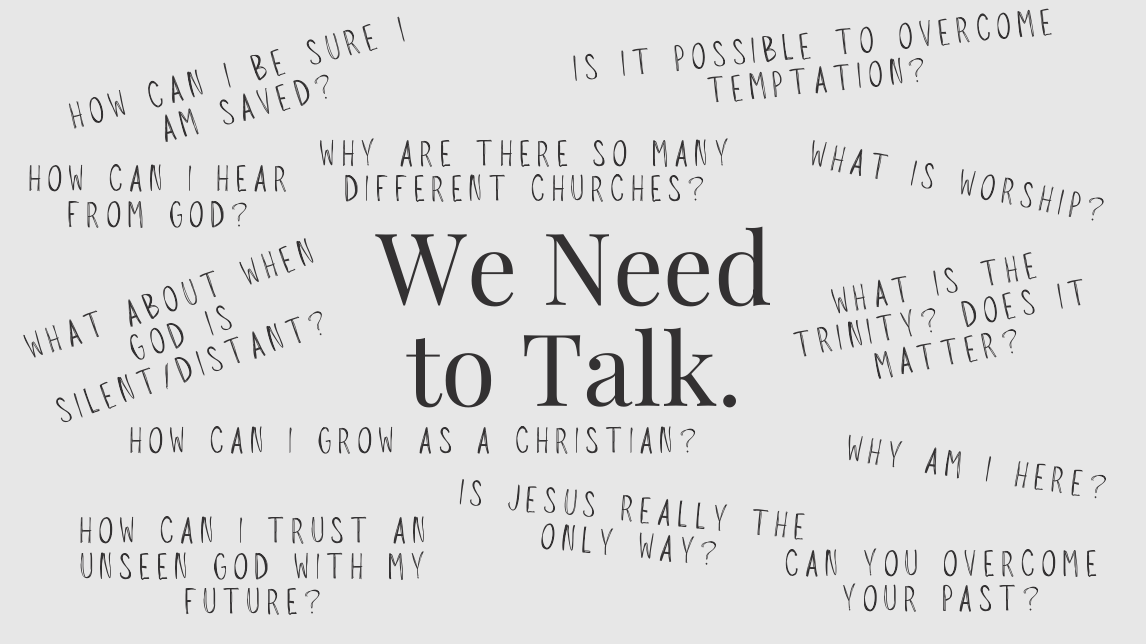
How Do We Hear From God?
One of the most common spiritual frustrations people carry is simple:
“I don’t know if God is speaking to me.”
Maybe you have wondered that yourself. Or maybe your question goes even deeper:
“Is there anyone there to speak at all?”
In a world filled with notifications, podcasts, social media, breaking news, constant opinions, and endless noise, we are surrounded by voices. Everyone is talking. Very few are listening.
That may be one reason so many people struggle to recognize the voice of God. We are not always sure what we are listening for. We may expect God to speak in dramatic, unmistakable ways, while missing the quieter ways He forms, leads, corrects, and comforts us.
The good news is that the Bible is filled with people asking similar questions. Scripture is not a collection of spiritually flawless people confidently hearing God’s voice every day. It is filled with confused people, fearful people, doubting people, distracted people, and ordinary people learning to trust God one step at a time.
And again and again, God continues speaking.
God’s Primary Language Is Relationship
One of the most important lessons Scripture teaches is that God’s primary language is relationship, not interruption.
Many of us imagine hearing from God as a sudden moment of certainty. We want a booming voice, a miraculous sign, or an unmistakable answer. We want God to interrupt the noise of our lives with something so obvious that we cannot miss it.
Sometimes God does speak in dramatic ways. But often, God speaks in ways that invite us closer rather than overwhelm us.
When the prophet Elijah encountered God in 1 Kings 19, God was not in the windstorm, the earthquake, or the fire. Instead, Elijah encountered God in a gentle whisper.
That story matters because many of us are waiting for a spectacle while ignoring the whisper.
God is not merely trying to give us information. He is inviting us into communion. He does not only want to direct our steps. He wants to shape our hearts.
How Does God Speak to Us Today?
The Bible shows us several ways God commonly speaks and leads His people. While God is never limited by our categories, these are some of the ordinary ways we learn to recognize His voice.
1. God Speaks Through Scripture
The clearest and most reliable way God speaks is through Scripture.
The Bible reveals who God is, what He values, what He has done, and what kind of people He is forming us to become. If we want to recognize God’s voice, we need to become familiar with God’s character.
God’s voice will not contradict God’s Word.
This does not mean every verse gives a direct answer to every decision. The Bible may not tell you which job to take, which house to buy, or exactly what your next five years will look like. But Scripture does form your wisdom. It teaches you what love looks like. It shows you what faithfulness requires. It helps you recognize the difference between fear and conviction, pride and courage, selfish ambition and holy desire.
If you want to hear from God, begin by listening to what God has already spoken.
2. God Speaks Through Prayer
Prayer is not only talking to God. It is also becoming attentive to God.
Many of us approach prayer with a list of needs, concerns, and requests. That is good and biblical. God invites us to bring our burdens to Him. But prayer is also a place where our hearts become still enough to notice what God may be forming within us.
Sometimes God speaks in prayer by bringing conviction. Sometimes He brings peace. Sometimes He reveals something we have been avoiding. Sometimes He simply reminds us that we are loved, held, and not alone.
Prayer does not always produce instant clarity. But over time, prayer forms attentiveness.
3. God Speaks Through Christian Community
God often speaks through other people.
That does not mean every opinion someone shares is from God. But throughout Scripture, God uses friends, prophets, teachers, pastors, mentors, and the gathered community to encourage, correct, and guide His people.
Healthy Christian community helps us discern what we may not be able to see clearly on our own.
Sometimes we need someone to ask a better question. Sometimes we need someone to lovingly challenge us. Sometimes we need someone to remind us of what is true when our emotions are loud.
If you are trying to hear from God, do not isolate yourself. Discernment is often strengthened in community.
4. God Speaks Through Wisdom
Not every decision requires a sign. Some decisions require wisdom.
The book of Proverbs teaches us to seek wisdom, pursue understanding, and walk in the fear of the Lord. That means God often leads us not by giving us a dramatic answer, but by forming us into wise people.
Wisdom asks questions like:
What choice reflects the character of Christ?
What choice leads toward love, humility, faithfulness, and integrity?
What choice honors God and serves others?
What choice is rooted in fear, pride, or selfishness?
What counsel have I received from mature believers?
God’s guidance is not always about receiving a new word. Sometimes it is about faithfully applying what God has already made clear.
5. God Speaks Through Conviction
There are times when God gets our attention through conviction.
Conviction is different from shame. Shame says, “You are beyond hope.” Conviction says, “Come back to life.”
The Holy Spirit does not expose sin in order to destroy us. He brings truth so that we can be healed, restored, and made more like Jesus.
When God convicts us, He often leads us toward confession, repentance, reconciliation, humility, and obedience. His voice may be uncomfortable, but it will not be cruel. It will always be consistent with the character of Christ.
6. God Speaks in Quiet Attentiveness
In a noisy world, quiet can feel uncomfortable. But quiet is often where we become aware of what noise has been covering up.
We may discover grief we have not named. Fear we have been avoiding. Desire we have been numbing. Weariness we have been ignoring. Or the gentle invitation of God that has been present all along.
Hearing from God may begin with slowing down long enough to become present—to God, to His Word, and to your own soul.
Attention itself becomes spiritual.
How Do I Know If It Is God’s Voice?
This is one of the most important questions in spiritual discernment.
Not every thought is from God. Not every feeling is the Holy Spirit. Not every open door is God’s will. Not every spiritual impression should be obeyed without wisdom, Scripture, and community.
At the same time, not every spiritual impression is imaginary.
So how do we discern?
A helpful question is this:
Does this lead me toward the character of Christ?
God’s voice consistently leads us toward love, truth, humility, courage, compassion, holiness, wisdom, and faithfulness. God may challenge us, but He will not lead us into hatred, arrogance, manipulation, bitterness, fear, or unfaithfulness.
God’s voice will align with Scripture.
God’s voice will reflect the character of Jesus.
God’s voice will produce the fruit of the Spirit.
God’s voice will invite obedience, not ego.
God’s voice will deepen love for God and neighbor.
Discernment is rarely about chasing certainty. More often, it is about learning to recognize the direction in which God is forming us.
What If God Feels Silent?
There will be seasons when God feels silent.
The Bible takes those seasons seriously. The Psalms are filled with honest cries from people who felt abandoned, unheard, confused, or forgotten. God is not offended by honest prayers. In fact, Scripture gives us language for them.
Silence does not always mean absence.
Sometimes silence is an invitation to deeper trust. Sometimes it is a season of formation. Sometimes it reveals what we have been relying on besides God. Sometimes it teaches us to seek God Himself, not merely answers from God.
That does not make silence easy. But it does mean silence is not proof that God has left.
God’s faithfulness is not measured only by how clearly we feel Him in a particular moment. His faithfulness is revealed most fully in Jesus, who entered our suffering, carried our sin, conquered death, and promised to be with us always.
Maybe the Better Question Is Not “Is God Speaking?”
Perhaps the most important question is not only:
“Is God speaking?”
Perhaps it is also:
“Am I becoming the kind of person capable of listening?”
Because in a world addicted to noise, listening is an act of faith.
We often want answers about our future while God is inviting us into transformation today. We want direction, but God wants relationship. We want certainty, but God wants trust. We want a technique, but God wants our attention.
Hearing from God is not about mastering a formula. It is about learning to walk with God.
So begin simply.
Open Scripture.
Pray honestly.
Create quiet.
Listen in community.
Pay attention to conviction.
Seek wisdom.
Look for what leads you toward Jesus.
God is not hiding from you. He is inviting you closer.
Frequently Asked Questions About Hearing From God
How do I hear from God?
We hear from God primarily through Scripture, prayer, Christian community, wisdom, conviction, and quiet attentiveness. God’s voice will always be consistent with His character and His Word.
Does God still speak today?
Yes, God still speaks today, but His voice is not always dramatic or audible. He often speaks through Scripture, the Holy Spirit’s work in our hearts, wise counsel, and the ordinary rhythms of a life attentive to Him.
How can I tell the difference between God’s voice and my own thoughts?
Test what you are sensing against Scripture, the character of Jesus, the fruit of the Spirit, and wise Christian counsel. God’s voice leads toward love, truth, humility, courage, compassion, and faithfulness.
Why does God feel silent sometimes?
God’s silence does not mean God is absent. Scripture shows that faithful people sometimes experience seasons of silence, confusion, or waiting. These seasons can become invitations to trust, honesty, patience, and deeper formation.
What is the first step to hearing God more clearly?
Start by slowing down and making space for Scripture and prayer. In a noisy world, attention is one of the first steps toward spiritual discernment.
Final Thought
Hearing from God begins not with mastering a technique, but with becoming present.
Present to God.
Present to His Word.
Present to the Spirit’s work within you.
Present to the people God has placed around you.
God’s voice is often quieter than the world around us, but it is also deeper, truer, and more faithful.
The question is not only whether God is speaking.
The question is whether we are learning to listen.